From GMC Misrepresentation to Nearly 10,000 Approved Products
Mirai Skin, an ecommerce skincare brand, was hit with a Google Merchant Center Misrepresentation suspension. After a full compliance reset across website trust signals, policies, shipping, and the product feed, the review was completed and the account returned to a stable, approved state with full Shopping eligibility.
Mirai Skin
Mirai Skin is an ecommerce skincare brand with a large product catalog that needed Google Merchant Center approved to run Shopping ads. After a Misrepresentation suspension, the business needed more than a quick appeal, it needed a stable, compliant foundation that could support ongoing Shopping activity without triggering another suspension.
A Misrepresentation suspension with hidden root causes
Misrepresentation suspensions rarely tell you the full reason behind the issue. On the surface the store looked fine, but behind that single policy label there were multiple trust, policy, product feed, and account consistency issues that needed to be identified, corrected, and aligned before Google would approve the account again.
Fix the foundation, then submit the review
Instead of patching one visible issue and hoping for the best, we reviewed the full customer journey from Google's perspective and rebuilt trust across the store, the feed, and the Merchant Center setup.
Full compliance audit
Reviewed business info, contact, policy pages, shipping, returns, product feed, GMC settings, and the full checkout flow.
Alignment and feed cleanup
Made the website, policies, shipping, and Merchant Center settings tell the same story, and tightened the product feed for quality.
Controlled review submission
Only submitted the review once the case was airtight, so the Misrepresentation issue could be removed cleanly.
A full compliance reset across the store and feed
Website Trust & Policy Review
- Contact page and support details cleaned up
- Shipping, return, refund, privacy, and terms aligned
- Footer business information made consistent
- Checkout transparency and payment signals improved
Shipping & Return Alignment
- Shipping rates matched between site and GMC
- Delivery timeframes and country targeting verified
- Return windows and refund conditions standardized
- Customer facing policy language unified
Product Feed Compliance
- Removed weak and incomplete product data
- Fixed missing images and variant issues
- Corrected availability and pricing mismatches
- Prioritized strong products first to keep account stable
Merchant Center Configuration
- Business info and website verification corrected
- Shipping and return settings rebuilt to match site
- Product source and destination settings aligned
- Country targeting and approval monitoring set up
Controlled Review Submission
- Fixed the foundation before requesting a review
- Submitted only when the case was airtight
- Avoided weak appeals that hurt future reviews
- Misrepresentation issue removed after review
Safer Catalog Scaling
- Pushed the right products first, not all at once
- Monitored approvals across the full catalog
- Reduced the risk of re-suspension
- Stabilized account for ongoing Shopping activity
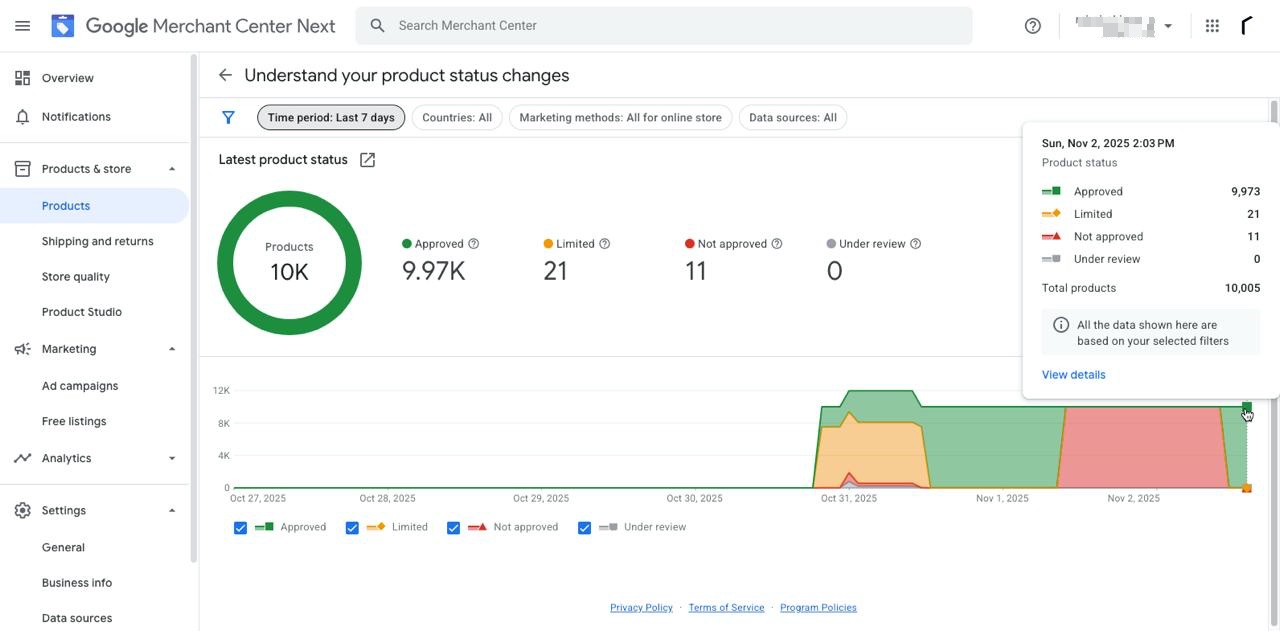
9,973 products approved and Misrepresentation removed
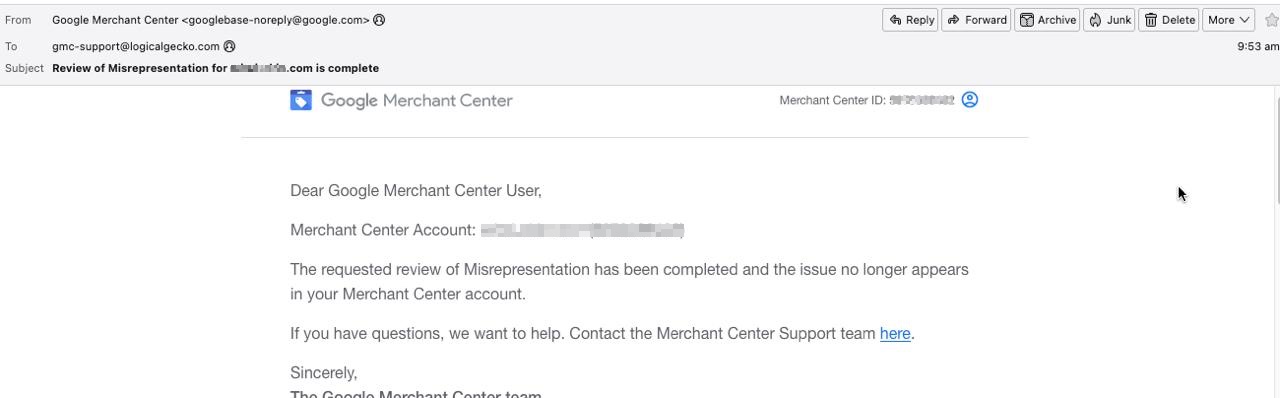
After the compliance corrections and review submission, Google completed the review and the Misrepresentation issue no longer appeared in the Merchant Center account. The catalog moved into a strong, stable approval state.
Before Logical Gecko
- ·Misrepresentation suspension blocking Shopping ads
- ·Hidden compliance issues across policies and feed
- ·Shipping and return mismatches between site and GMC
- ·Weak trust signals and inconsistent business info
- ·Product feed quality holding back approvals
- ·Risk of more failed reviews and longer recovery
After Logical Gecko
- Misrepresentation review completed successfully
- Merchant Center account restored
- 9,973 products approved out of around 10,005
- Only 21 limited and 11 not approved
- Account eligible for Shopping activity again
- Stable foundation for safer catalog scaling
What other store owners can learn from this recovery
Misrepresentation is rarely one issue
It is usually a stack of small inconsistencies across trust signals, policies, shipping, and feed that together create doubt.
Fix the foundation before appealing
Every failed review makes the next one harder. Stabilize the website, policies, and feed first, then request the review.
Shipping and returns must match exactly
Website, checkout, policy pages, product pages, and GMC settings all need to tell the same story.
Feed quality protects the account
Missing images, weak product pages, and variant issues are common reasons accounts get flagged again after approval.
Trust signals are not optional
Clear contact details, business info, support access, and consistent policies are how Google verifies a legitimate merchant.
Scale the catalog carefully
Pushing everything at once is risky. Prioritize compliant products first and grow from a stable approved state.
Is Your GMC Suspended for Misrepresentation?
Do not keep submitting appeals without fixing the real issues first. Every failed review can make recovery harder. We help ecommerce brands identify the root cause, fix compliance issues, and rebuild trust with Google.
More GMC Case Studies
Real recoveries from Merchant Center suspensions and Misrepresentation flags.
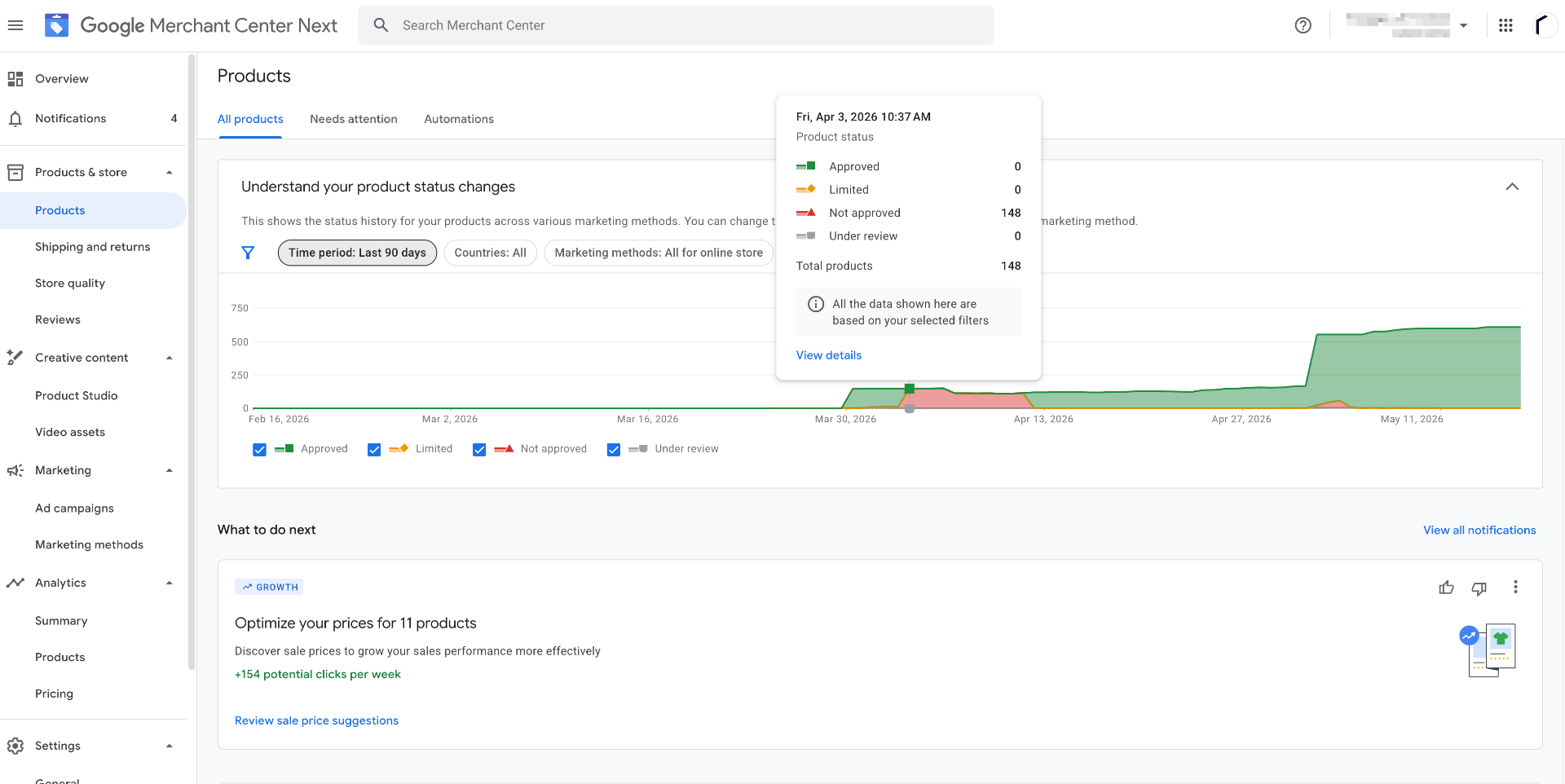
Recovered from GMC Misrepresentation
Full compliance audit, feed cleanup, and trust signal rebuild restored GMC approval and reinstated Google Ads activity.
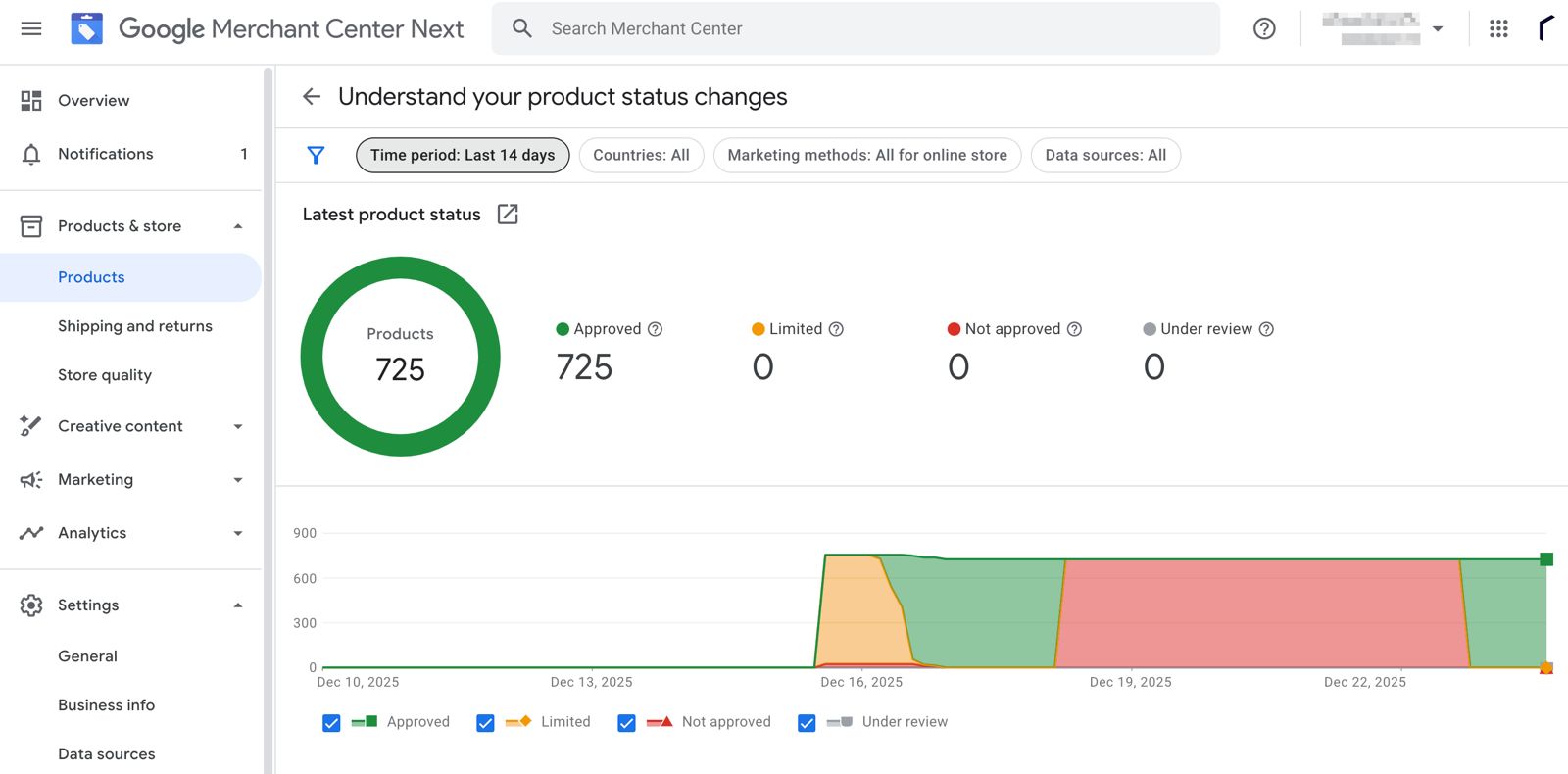
From GMC Misrepresentation to 725 Approved Products
Compliance cleanup, shipping and policy alignment, and controlled product scaling restored a stable, approved Merchant Center setup.
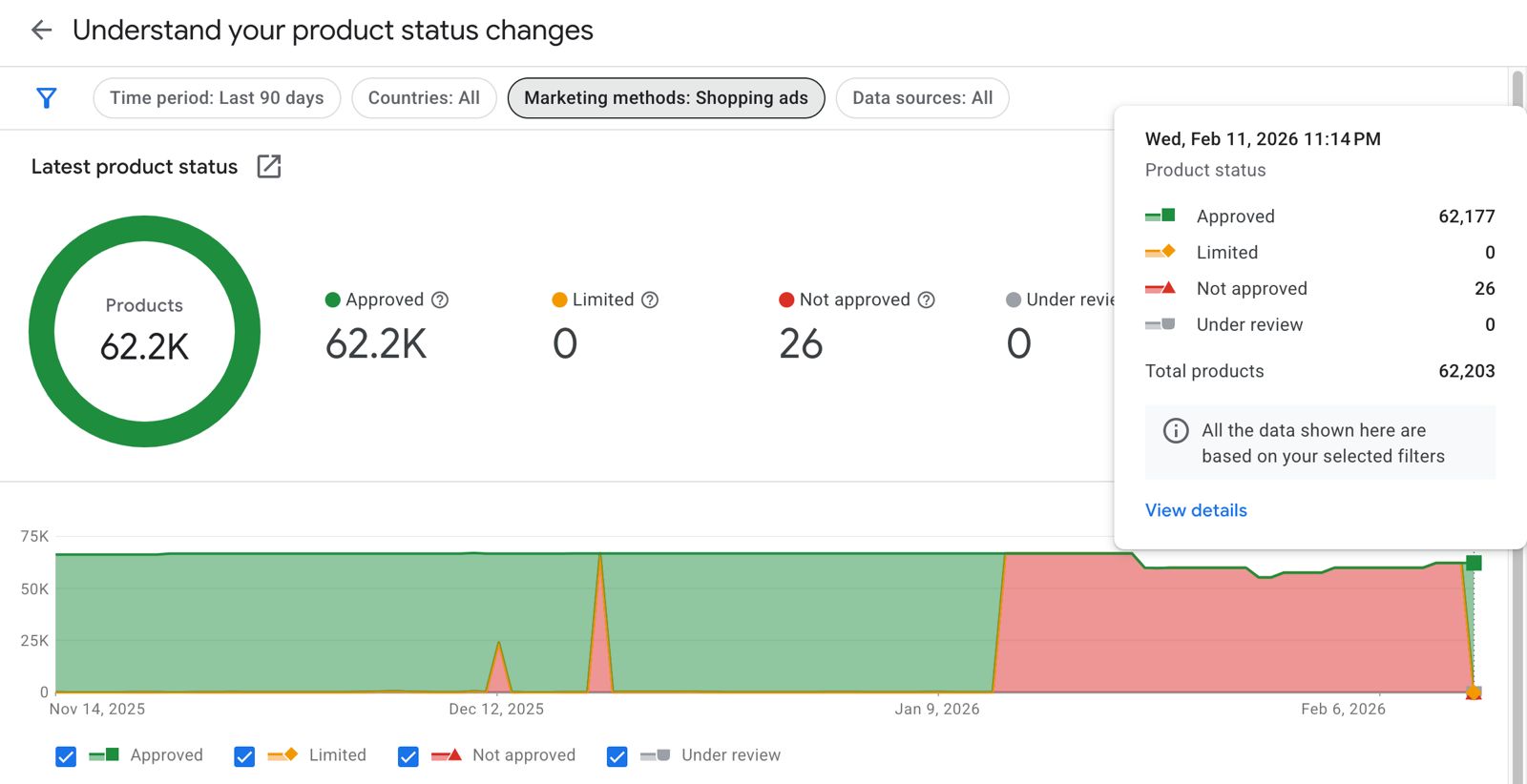
From 'Unlikely to Be Reversed' to 62,177 Products Approved
Established international ecommerce brand recovered from a complex GMC Misrepresentation suspension involving trust signals, shipping mismatches, and third-party brand impersonation.
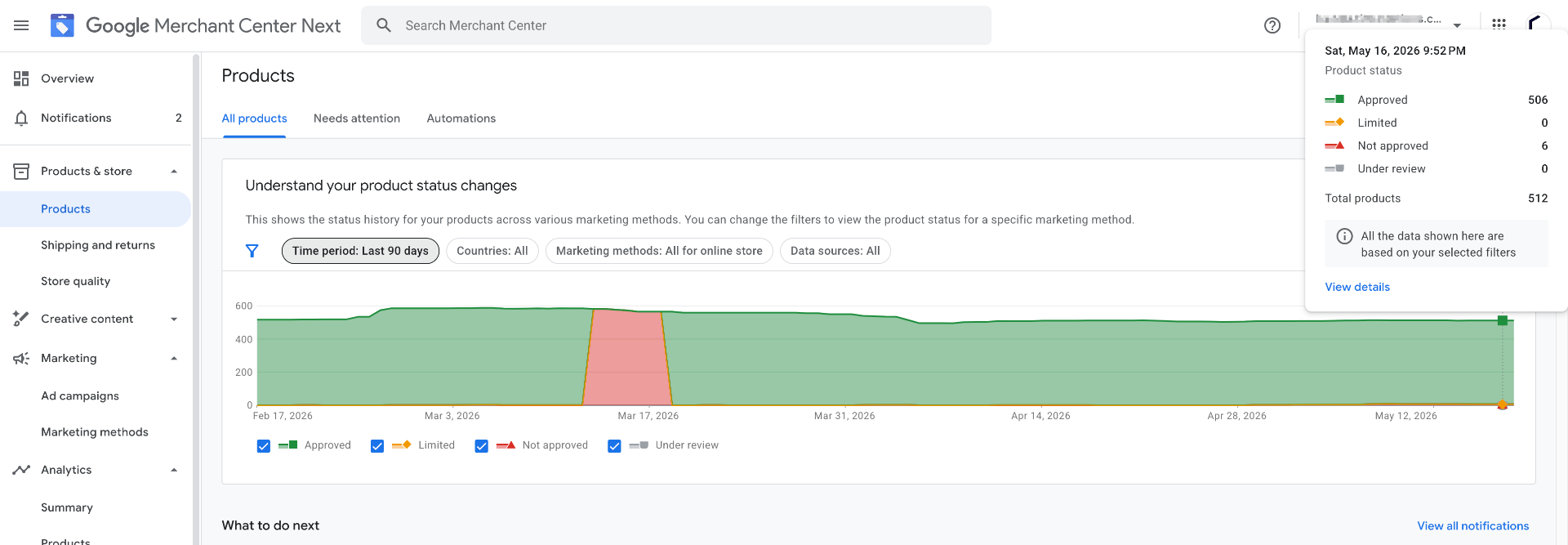
From Failed Appeals to 506 Approved Products
US ecommerce store recovered from a GMC Misrepresentation suspension after multiple failed appeals through a full compliance rebuild and controlled product rollout.
These case studies represent selected examples from our broader GMC recovery work. Results may vary depending on account history, website compliance, product data, and Google’s review process.